Uterine Fibroids and Pregnancy 🤰🏻
Yun-I nursing consultant Guan-Ru Chen explains:
Uterine myoma, also known as uterine fibroids, is a common gynecologic condition. It most often occurs in women of reproductive age over 30, with an estimated prevalence of about 20%.
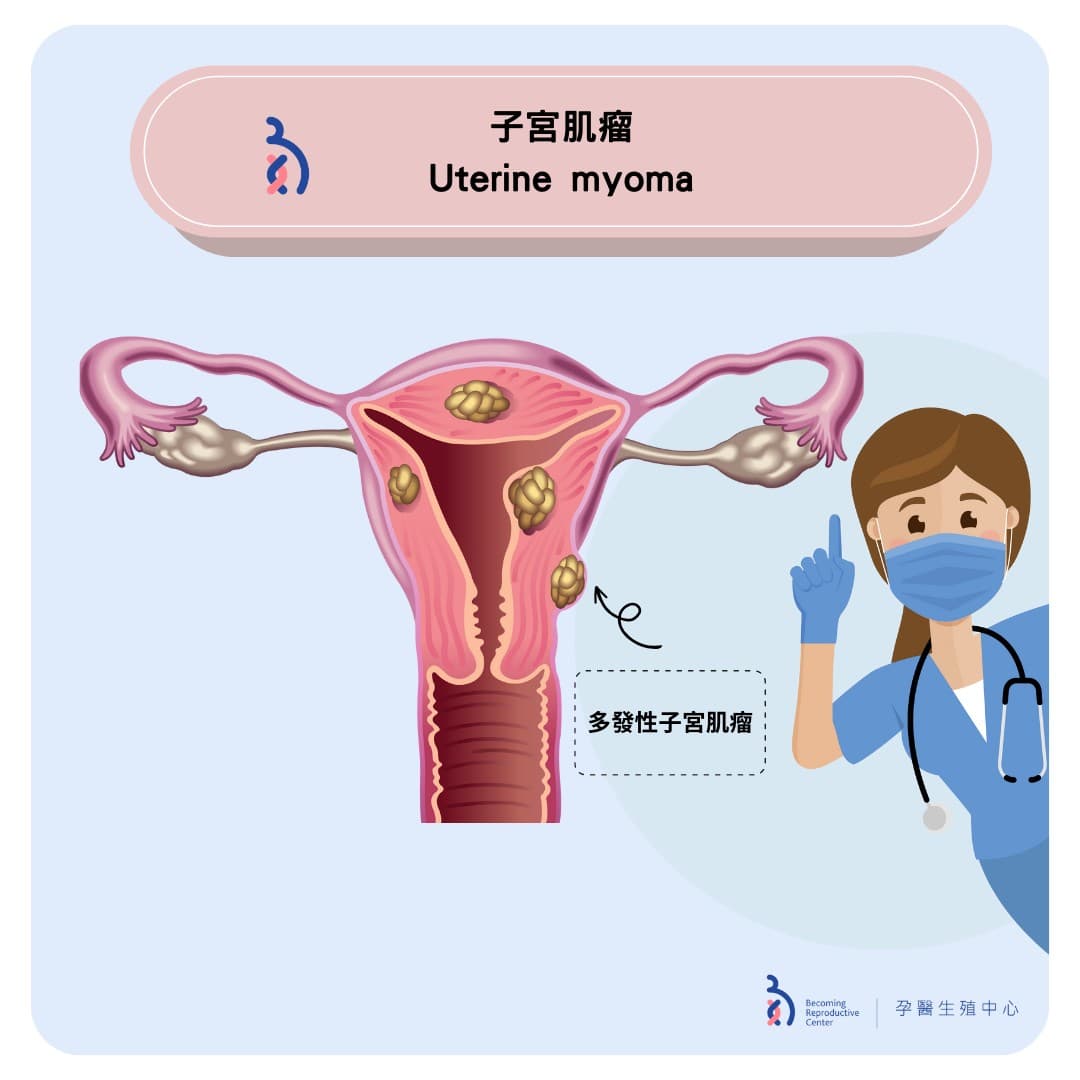
Uterine fibroids are tumors formed by abnormal proliferation of uterine smooth muscle and surrounding connective tissue.
Ultrasound can be used to confirm the location of fibroid growth. Based on location, fibroids can be classified as submucosal fibroids, intramural fibroids, and subserosal fibroids.
- Symptoms of uterine fibroids
Symptoms vary depending on the location and size of the fibroids.
Most fibroids do not cause obvious symptoms.
If a fibroid extends into the uterine cavity, it may cause abnormal bleeding.
Larger fibroids may compress the bladder and cause frequent urination, or compress the rectum and cause constipation. They may also cause pain.
- Examination methods for uterine fibroids
Fibroids can be evaluated through pelvic examination, ultrasound, hysteroscopy, and other methods.
- Treatment options for uterine fibroids
If fibroids do not cause any symptoms, regular follow-up and observation may be enough.
Treatment options mainly include surgery and medication.
The treatment plan depends on the symptoms, location, size, number of fibroids, age, and whether there is a future pregnancy plan.
- Risks of uterine fibroids during pregnancy
The Taiwan Society of Perinatology has indicated that uterine fibroids are an unfavorable factor for pregnancy.
Fibroids not only occupy space in the pelvic cavity, but may also affect endometrial receptivity, resulting in lower implantation rates and higher miscarriage rates.
During pregnancy or delivery, fibroids may also increase the risk of preterm birth, placental abruption, placenta previa, abnormal fetal position, or difficult labor requiring cesarean section.
For patients who plan to have children and whose fibroids have already affected embryo implantation, it is recommended to consult an infertility specialist first to plan the most suitable treatment approach.
The options may include removing the fibroids before trying to conceive, or arranging egg retrieval first, creating good-quality embryos, and then undergoing fibroid removal surgery.
After creating a better environment for implantation, embryo transfer can then be performed, with the goal of improving the chance of pregnancy.
The purpose of fibroid surgery should not only be to relieve symptoms, but also to consider whether successful implantation and pregnancy can be achieved after surgery. 🤱🏻
Yun-I wishes your dreams come true!