Many patients hear this during an ultrasound exam:
“Your uterus is retroverted.”
Then they nervously ask:
“Is that a problem?”
Actually, there is no need to worry too much.
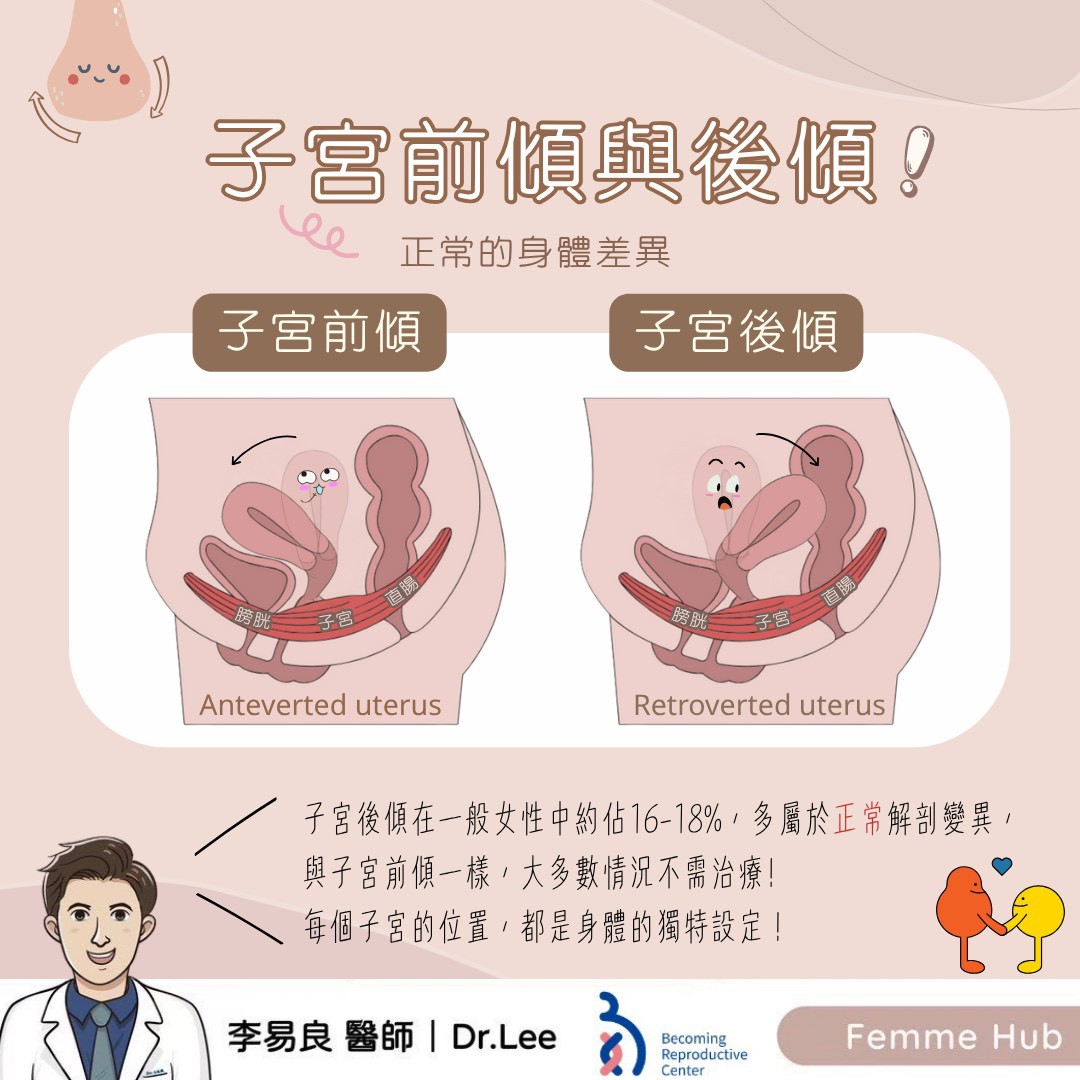
Anteverted uterus vs. retroverted uterus — both are actually normal.
An anteverted or retroverted uterus is simply a normal anatomical variation. About 16–18% of women have a retroverted uterus.
Most people have no symptoms at all, and it does not affect pregnancy or childbirth.
According to scientific literature, women with a retroverted uterus may have a slightly lower natural conception rate. Because of this, some may be more likely to seek help through IVF.
However, once pregnancy occurs, the pregnancy course is not significantly different from that of women with an anteverted uterus.
It does not increase the risk of miscarriage, preterm birth, or abnormal fetal position.
However, discomfort may occur if it is associated with conditions such as:
・Deep infiltrating endometriosis
・Uterine or vaginal prolapse, or pelvic floor relaxation
・Severe menstrual pain, pain during intercourse, or difficulty urinating
The treatment principle is simple:
No symptoms → No treatment needed
Symptoms present → Treat according to the underlying cause
A difference in uterine angle does not mean it is “bad” or “abnormal.”
As long as there are no obvious symptoms, there is no need to intentionally correct it.
Every uterus has its own unique position — it is simply part of your body’s natural setting.
BRCIVF wishes your dreams come true!