English
Hong Kong and Taiwan Join Forces to Advance Assisted Reproductive Medicine: Strategic Alliance Launched with a Globally Unique Smart Medical Management System
Reported by EBC News and Apple Daily on October 27, 2020
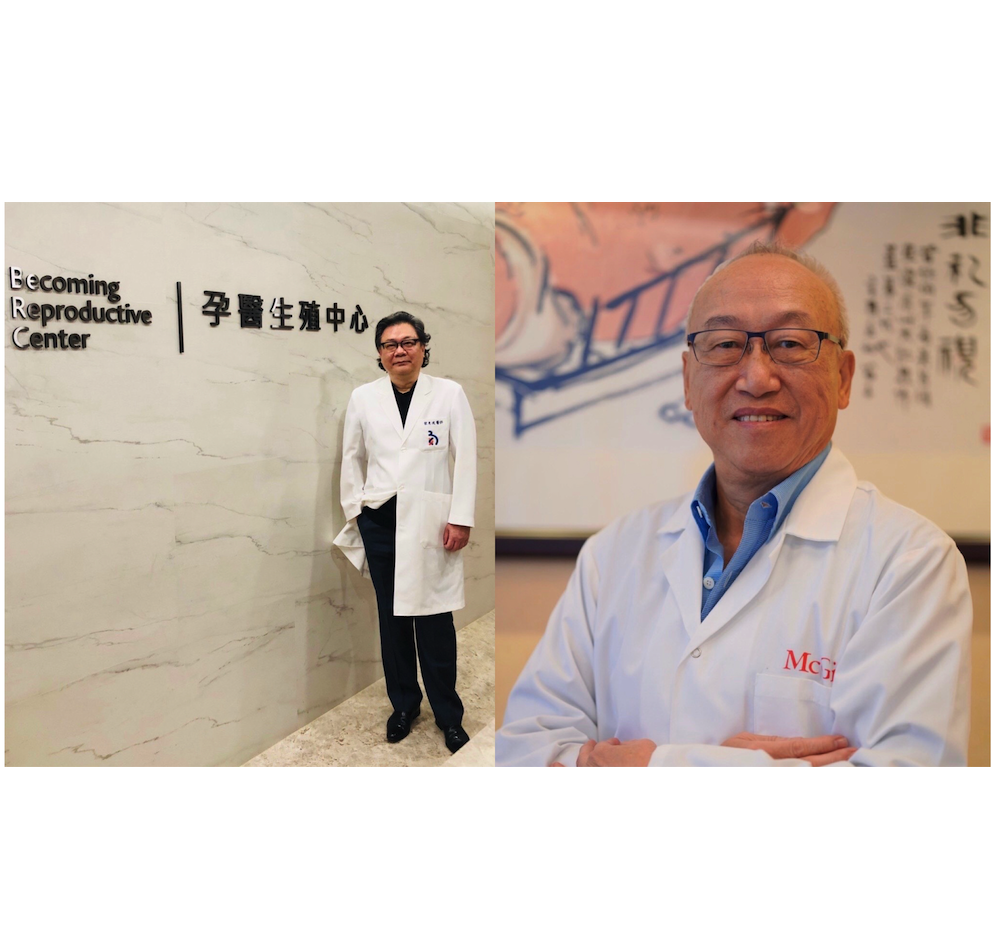
BRCIVF Reproductive Center, which continues to lead in assisted reproductive medical technology, announced on October 26 that it has become the first strategic partner in Taiwan of internationally renowned Hong Kong reproductive medicine expert Dr. Philip Leung.
The two parties will collaborate in professional technology exchange and talent development, with the hope of advancing reproductive medicine in both Taiwan and Hong Kong while benefiting patients from both regions in diverse ways.
In addition, BRCIVF is leading the industry by cooperating with a medical technology company to develop the world’s first smart medical management system. This system integrates three major medical platforms: the patient service app, HIS outpatient information system, and EMR laboratory management system. The goal is to improve doctor-patient relationships and increase the efficiency of medical research.
According to the Health Promotion Administration’s assisted reproduction outcome report, the number of assisted reproductive treatment cycles in Taiwan grew significantly by 75% between 2014 and 2018. The proportion of Single Embryo Transfer, SET, treatments has also increased. At BRCIVF, the SET rate reached 73% as of September this year, demonstrating that SET is becoming the trend for achieving healthy, high-quality pregnancies.
First Taiwan-Hong Kong alliance benefits assisted reproductive medicine; reproductive authority Dr. Philip Leung chooses BRCIVF
In 1986, Hong Kong reproductive medicine authority Dr. Philip Leung established the first in vitro fertilization center at Hong Kong Sanatorium & Hospital. In December of the same year, Hong Kong’s first IVF baby was successfully born.
This is Dr. Leung’s first collaboration with Taiwan in contributing assisted reproductive medical technology. He chose BRCIVF Reproductive Center as his strategic partner in Taiwan.
In the future, both parties will engage in more technical consultation and research, personnel exchange and training, case sharing, laboratory internships, forums, and lectures. This alliance marks a new milestone for reproductive medicine cooperation between Taiwan and Hong Kong.
Dr. Leung stated: “Taiwan and Hong Kong both entered IVF research early and enjoy a strong professional reputation in the field of reproductive medicine in Asia, with rich practical experience. In addition, compared with many other countries, Taiwan has more complete assisted reproduction regulations, which is one of the main reasons I actively seek overseas technical cooperation. This is my first collaboration with a reproductive center in Taiwan. I look forward to working with BRCIVF, sharpening our techniques together, creating new sparks of innovation, and integrating resources from both sides to benefit patients and provide a better fertility treatment experience.”
The world’s first smart medical management system: building AI-powered doctor-patient communication
In addition to the support of an internationally renowned reproductive medicine expert, BRCIVF recognizes that the digital era has arrived. Emerging technologies such as artificial intelligence, big data, and cloud computing may transform reproductive medicine.
BRCIVF is therefore leading the industry by collaborating with AI medical technology developer PeiZhi Biomedical Technology to jointly develop the world’s first smart medical management system.
This system is the first to fully integrate three major medical platforms: the patient service app, HIS outpatient information system, and EMR laboratory management system. It provides more scientific, agile, and accurate management among physicians, patients, nurses, hospitals, outpatient clinics, and laboratories. It also deepens AI-powered medical management, making doctor-patient relationships more transparent and reassuring.
APP Patient Service System:
Includes appointment registration, treatment review, test results, embryo inventory, and other patient service management functions.
HIS Outpatient Information System:
Includes consultation, medication, scheduling, testing, barcode verification, medical imaging, nursing information, medical administration, inventory systems, electronic medical records, and other outpatient management functions.
EMR Laboratory Management System:
Includes big data reporting, statistics, analysis, and research management for the embryo laboratory and time-lapse embryo incubator.
Dr. Hui-Po Li, Director of BRCIVF Reproductive Center, stated: “After more than 30 years of medical practice, I found that the issues patients complain about most are long waiting times, lack of transparency, and tense doctor-patient relationships. Therefore, the original purpose of designing this system was to make doctor-patient communication simpler and clearer, build mutual trust, and make medical management faster and more accurate. Assisted reproduction is truly a journey that races against time. For physicians, using AI technology to support high-efficiency and high-accuracy clinical diagnosis and treatment to help patients is absolutely worth investing in.”
Dr. Li further explained that BRCIVF and its technology partner spent more than one year repeatedly testing and designing from the user’s perspective before finally developing this smart medical management system. It integrates appointment registration, clinic medical affairs, electronic medical records, laboratory management, and other medical information. This is a global innovation.
Through this system, patients can access complete data analysis and imaging records via mobile app from their first appointment to successful pregnancy.
In medical administration, the system reduces manpower burden and the risk of human error, improves medical quality, and shortens the consultation process.
In laboratory applications, AI computing technology and data analysis can serve as an engine for embryo development. In other words, AI is used to help select embryos, increasing embryo development rates and pregnancy rates.
Assisted reproductive treatment in Taiwan grows by 75%; Single Embryo Transfer becomes the fertility trend
According to the annual Assisted Reproduction Outcome Analysis Report issued by the Health Promotion Administration, Ministry of Health and Welfare, the latest five-year data show that assisted reproduction is becoming increasingly popular.
The total number of assisted reproductive treatment cycles in 2018 increased by more than 75% compared with 2014, rising from 22,684 cycles in 2014 to 39,840 cycles in 2018. More than 90% of cycles used the couple’s own sperm and eggs. Among patients using donated eggs, more than 60% were over 40 years old, showing that more mature-age infertility patients are seeking treatment more actively than before.
In addition, the proportion of single embryo transfers increased from 12.1% in 2014 to 20.5% in 2018. This shows that Single Embryo Transfer, SET, which prioritizes quality over quantity, is becoming the future trend in assisted reproduction.
At BRCIVF Reproductive Center, the SET rate had reached 73% as of September this year.
Dr. Hui-Po Li further noted that, as both a reproductive medicine specialist and obstetrician-gynecologist, he has clinically observed many risks caused by transferring multiple embryos, including premature birth, impaired growth and development, increased family caregiving burden, and broader social issues.
Therefore, BRCIVF strongly encourages patients to adopt SET treatment, selecting and transferring the single best embryo. Helping patients give birth to a healthy, high-quality new life is BRCIVF’s ultimate goal.