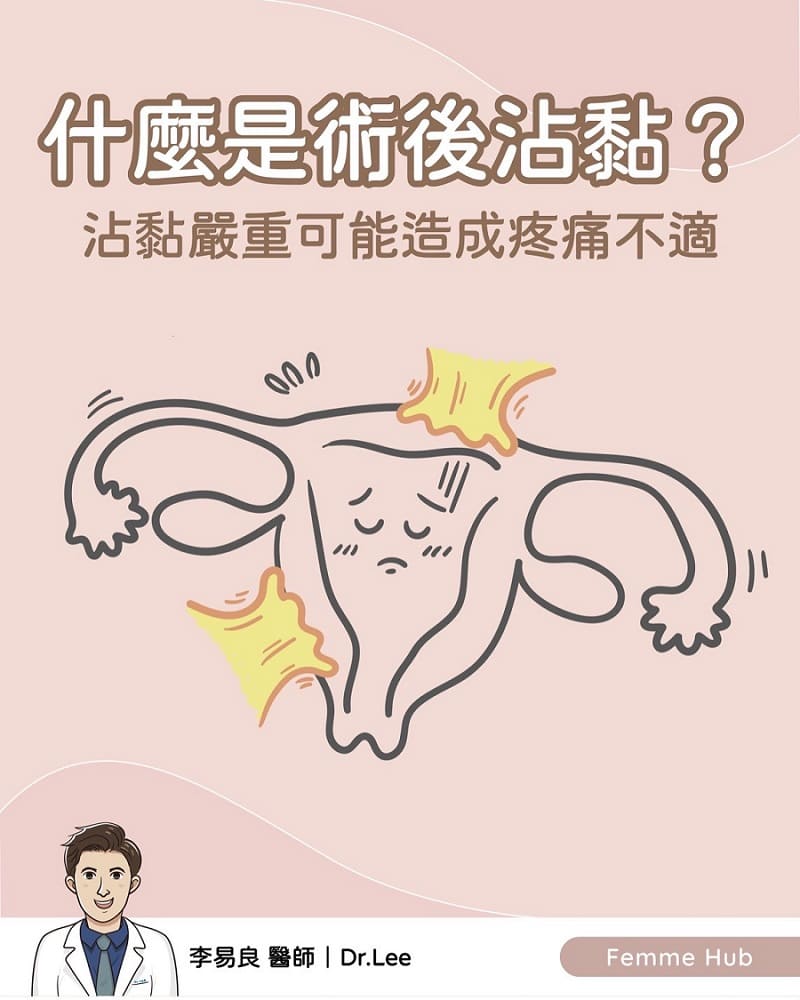
👨🏻⚕️ Why Do Postoperative Adhesions Occur⁉️
📌 After surgery, the wound is already in an inflammatory state. In addition, blood, tissue fluid, or sutured areas remaining in the abdominal cavity may trigger a local inflammatory response at the wound site, which should otherwise heal smoothly.
Over the following two weeks to one month, the fibrosis process begins to create “connections” between tissues.
This most commonly occurs on the surfaces of the intestines, ovaries, fallopian tubes, or uterus that have just undergone surgery, causing them to stick to one another.
📌 Clinical symptoms and diagnostic challenges
When the intestines adhere to other pelvic organs, mild cases may have no symptoms at all.
However, if the adhesion area becomes larger, it may restrict intestinal movement, causing bloating, constipation, and in severe cases, even bowel obstruction.
Because ordinary ultrasound or CT scans cannot directly visualize these fine adhesions, doctors often have to rely on postoperative abdominal pain, gastrointestinal discomfort, or findings during a repeat surgery to identify the problem.
📌 How can adhesions be prevented⁉️
To reduce the problem of postoperative adhesions, thorough hemostasis during surgery is essential.
In addition, delicate suturing and complete cleansing of blood and tissue fluid inside the abdominal cavity are also important.
Modern gynecologic surgery often includes anti-adhesion measures as a basic step.
At the end of surgery, absorbable barrier materials may be placed between the wound and nearby tissues, such as on the uterus or ovaries, to greatly reduce the occurrence of adhesions.
📌 What anti-adhesion options are available⁉️
Currently, commonly used anti-adhesion medical materials can be divided into three major categories:
1️⃣ Hyaluronic Acid–Collagen Barrier Film
This thin film is made of natural hyaluronic acid and collagen. During surgery, it is applied directly to the surface of the uterus or intestines.
After contacting abdominal fluid, it slightly expands and fully covers the wound and nearby tissues, preventing them from rubbing against each other during the healing period.
Most products are broken down by enzymes into small molecules and absorbed within two weeks, without remaining in the body or causing a foreign body reaction.
2️⃣ Carboxymethylcellulose Solution
This water-soluble barrier gel solution is injected into the abdominal cavity near the end of surgery.
It helps keep organs such as the uterus, intestines, and ovaries appropriately separated before healing is complete.
Compared with film-type materials, it is easier to apply and does not require precise placement to work.
This liquid is usually cleared by the body within about one week.
3️⃣ Fibrin Sealant
Fibrin sealant has both hemostatic and barrier functions.
It contains fibrin-like components similar to those found in plasma. When applied to the incision site during surgery, it can quickly seal small blood vessels and form a thin gel barrier.
This natural barrier layer can help prevent tissue adhesions without interfering with normal cellular repair.
📌 Preoperative communication and postoperative monitoring
Before surgery, it is a good idea to discuss with your attending physician which anti-adhesion material may be used and understand how it works.
After surgery, if you experience intermittent abdominal pain, bloating, or constipation, please return for evaluation as early as possible.
If detected early, mild cases may improve with conservative treatment, helping avoid the new risks that can come with repeat surgery.
Incorporating these anti-adhesion measures into routine surgical care is one of the key ways to make postoperative recovery smoother and reduce the chance of another surgery.
BRCIVF wishes your dreams come true!