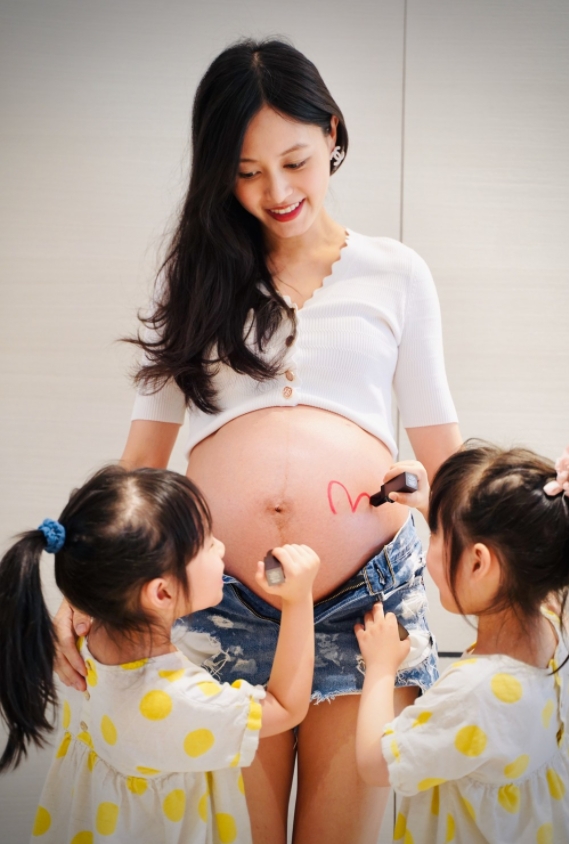
Successful Pregnancy Care During the Pandemic! Renowned Physician Dr. Li Hui-Po
Successfully performed IVF embryo transfer for former news anchor Kuo Hui-Ni during the pandemic,
who safely gave birth to a little Cancer prince yesterday
Becoming Reproductive Center promotes “Nurture Eggs, Support Pregnancy, and Care for Body and Mind” to build a fertility-friendly body
Taiwan has one of the lowest fertility rates in the world. In an era of later marriage, delayed parenthood, and declining birth rates, many couples choose artificial insemination or IVF to build the family they desire. Former well-known news anchor Kuo Hui-Ni fulfilled her wish of having a second pregnancy before the age of 40. During the pandemic in the second half of last year, she actively focused on improving egg quality and underwent IVF treatment. Following the egg-quality and pregnancy-care recommendations of Dr. Li Hui-Po, Director of Becoming Reproductive Center, she chose the center for both her IVF treatment and prenatal examinations. On July 5, she successfully gave birth to her second pregnancy and officially became a mother of three. The center's one-stop services, combined with its AI-powered embryo incubator and Single Embryo Transfer (SET) technology, not only improve IVF success rates but also provide expectant mothers with greater peace of mind.
“Six years ago, when I naturally conceived my twin girls, Dr. Li was already an important benefactor in my life. It was Dr. Li who encouraged us, and that was why my husband and I decided to take the risk and give birth to our twin daughters despite the various potential complications during pregnancy,” Kuo Hui-Ni said. Having already given birth to twins, she originally thought she was someone who conceived easily. However, after turning 35, she discovered that her chances of becoming pregnant had declined significantly. After consulting Dr. Li, she and her husband decided to try natural conception while simultaneously pursuing assisted reproductive treatment. “Now I am truly grateful that I had the determination to take action back then!”
Dr. Li Hui-Po, Director of Becoming Reproductive Center, stated: “Carefully cultivating embryos and selecting the single highest-quality embryo for transfer is safer than transferring multiple embryos at once.” Because IVF treatment can be costly, many physicians and patients may tend to transfer multiple embryos at one time in hopes of increasing the chance of pregnancy. However, transferring multiple embryos increases the likelihood of a multiple pregnancy, which not only raises the risks during pregnancy and childbirth but may also result in the difficult decision of fetal reduction. Kuo Hui-Ni shared that Dr. Li has many years of experience, and together with Becoming Reproductive Center's advanced and comprehensive equipment, even a single embryo transfer can achieve a high pregnancy rate. This was also one of the reasons she originally chose Becoming Reproductive Center: “Dr. Li always encouraged me by saying that one good embryo is enough, and this also allows the baby to stay safely and steadily in the uterus until full-term delivery!”
Dr. Li Hui-Po advocates three major care concepts: “Nurture Eggs, Support Pregnancy, and Care for Body and Mind”
In addition, to help address the declining birth rate, the government began implementing an IVF treatment subsidy program on July 1 of this year. Under the subsidy requirements, women aged 35 or younger may receive one embryo per transfer, while women aged 36 or older may receive no more than two embryos per transfer. The goal is to reduce maternal and infant risks associated with multiple pregnancies and decrease the medical resources and costs required to care for premature newborns. Dr. Li Hui-Po of Becoming Reproductive Center has long advocated Single Embryo Transfer (SET), which closely aligns with the subsidy eligibility requirements. During the pandemic, as the lifestyles of office workers changed, Becoming Reproductive Center also promoted three comprehensive care strategies—“Nurture Eggs, Support Pregnancy, and Care for Body and Mind”—to provide comprehensive attention to the physical and mental health of those trying to conceive and to help more couples successfully fulfill their dream of having children.
Kuo Hui-Ni added that many women hear all kinds of folk remedies while preparing for pregnancy, such as being told to eat certain foods or take various supplements. In reality, maintaining a stable daily routine and staying relaxed may be the best approach. “During treatment, supplement appropriately with inositol and folic acid, follow your doctor's instructions, and simply proceed according to the treatment plan!”
During her pregnancy, Kuo Hui-Ni also faced a local COVID-19 outbreak. She initially received prenatal examinations at both Becoming Reproductive Center and a teaching hospital, but eventually decided to return entirely to Becoming Reproductive Center because Dr. Li himself could provide both prenatal care and delivery services, making it easier to switch medical institutions during the pandemic. “Because Becoming Reproductive Center schedules patients in separate time slots, after making an appointment you basically won't encounter other patients during your consultation period. All medical, nursing, and administrative staff have also been vaccinated, which made me feel extremely safe and further convinced me that choosing Becoming Reproductive Center was the right decision.”
“It seems there aren't many people nowadays who have three children. Although the process involved some hesitation and hardship, and my friends all said that I already had two children and still went through egg retrieval—they really admired my determination. But in fact, once I made the decision, I simply put it into action.” She also encouraged other couples experiencing infertility. Although the journey to have a child can inevitably be difficult, the final result can still be joyful and worthwhile. “Taiwan has one of the lowest fertility rates in the world, but its IVF implantation success rate ranks among the highest globally. With such excellent technology and government subsidies now available, fulfilling the dream of having a child is no longer out of reach!”
The three major care concepts of “Nurture Eggs, Support Pregnancy, and Care for Body and Mind” include:
Nurture Eggs: A healthy, well-developed follicle is ideally around 18-23 mm in size. To support the development of high-quality eggs, women preparing for pregnancy are advised to appropriately supplement nutrients such as folic acid, inositol, vitamin D3, and Q10 to support ovarian health and help slow age-related decline.
Support Pregnancy: During pregnancy, appropriate supplementation of iron, folic acid, calcium, vitamins, iodine, dietary fiber, and other nutrients is recommended. Fresh and natural foods should be prioritized, while raw or cold foods, greasy foods, spicy or irritating foods, and alcoholic beverages should be avoided. If morning sickness affects appetite, eating smaller meals more frequently may help. In addition, if you already exercised regularly before pregnancy, you should generally continue maintaining suitable exercise during pregnancy, but exercise for the purpose of losing weight is not recommended.
Care for Body and Mind: In addition to physical care, mental health also requires attention. Factors that may cause pregnant women excessive fatigue or negative thinking should be reduced as much as possible. It is also important to find a professional assisted reproduction and obstetric team with whom you can communicate well, receive counseling, and share your treatment journey. Furthermore, if work is excessively demanding or stressful, consider discussing with your partner whether changes should be made to maintain a healthy balance among work, family, and daily life.
Starting July 1, the Health Promotion Administration expanded assisted reproduction subsidies to women under the age of 45
As late marriage and delayed pregnancy have become increasingly common in Taiwan, according to data from 2019, the average age at first marriage was 32.6 years for men and 30.4 years for women. Among women, the highest proportion of births occurred between ages 3034 (36.0%), followed by ages 3539 (25.5%). As a result, many couples frequently encounter the difficulty of “wanting to have a child but being unable to conceive.” The Health Promotion Administration therefore expanded the government-funded fixed-amount IVF subsidy program beginning July 1. As long as at least one spouse holds a Taiwanese national ID card, the wife undergoing treatment is under the age of 45, and the couple meets the medical indications for infertility subsidies, they may be eligible for government assistance.
For more information about Becoming Reproductive Center's services, please visit the official website: https://www.brcivf.com/
For more first-hand information, please follow Becoming Reproductive Center's Facebook page: https://www.facebook.com/brcivf888/
# # #
About Becoming Reproductive Center
Becoming Reproductive Center was established in April 2020 and is equipped with advanced AI-powered technology and comprehensive medical facilities. Guided by its R.E.A.L. philosophy—『Respectful, Empathy, Advanced, Live』—the center is committed to providing warm and compassionate assisted reproductive medical services and helping fertility patients experience the journey of conceiving a healthy baby according to the highest standards in the industry. Its professional care team consists of experienced physicians, embryologists, nurses, and consultants, providing consultations and services including infertility outpatient services ( OPD ), in vitro fertilization ( IVF ), sperm, egg, and embryo cryopreservation ( Cryopreservation ), preimplantation genetic testing ( PGT-A/ PGT-M ), intracytoplasmic sperm injection ( ICSI ), endometrial receptivity analysis ( ERA ), gamete donation ( Gamete Donation ), and more.
Media Contacts:
Becoming Reproductive Center 02-2100-6318
Sherry Wu 0919-210-821
Elina Liao 0933-915-158