EBC News Report, August 5, 2021
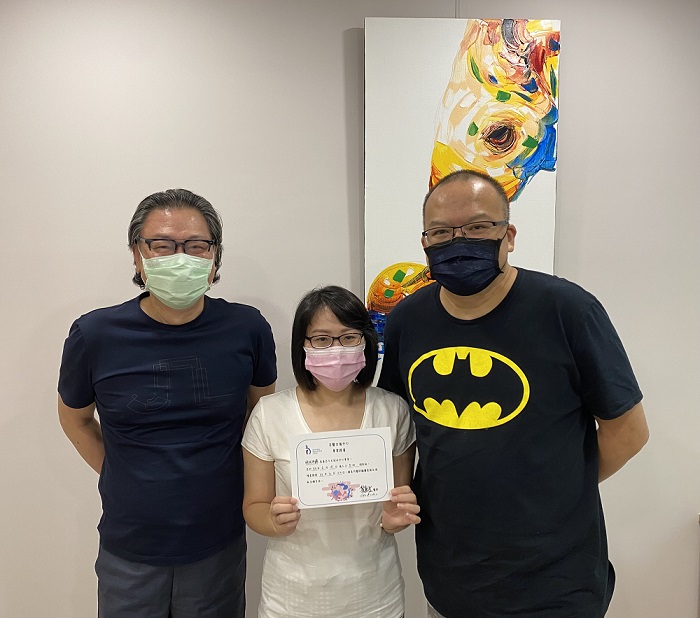
Dr. Hui-Po Li, Director of Yun-I Reproductive Center, successfully helped director Ming Jin-Cheng and his wife conceive twins through IVF. This is truly a case of perseverance finally bearing fruit.
Director Dr. Li stated that the journey of seeking pregnancy at an advanced maternal age is indeed challenging. However, with proper egg preparation, pregnancy care, and physical and emotional support, good results are still possible.
The couple’s fertility journey was not easy. Before coming to Yun-I Reproductive Center, they had already undergone 5 egg retrievals and 10 embryo transfers at other reproductive centers and hospitals, yet had not succeeded over the years.
Through a referral, they eventually consulted Dr. Hui-Po Li, a well-known obstetrician, gynecologist, and infertility specialist who had also delivered babies for celebrities such as Janet Chia and Bea Hayden. Dr. Li encouraged them to try again, and their second embryo transfer at Yun-I was successful. The pregnancy has now reached nearly 12 weeks.
After multiple failed IVF treatments and spending over one million NT dollars, the couple finally achieved success at Yun-I Reproductive Center. Even more joyfully, they are expecting twins. Their story truly reflects how dedication and perseverance can eventually lead to success.
As late marriage and delayed childbearing have become increasingly common, it remains an undeniable fact that pregnancy rates decline with age. The rising age of women entering fertility treatment has become a common challenge faced by reproductive centers in recent years.
Dr. Li also explained several key strategies for improving the chance of success when trying to conceive at an advanced maternal age.
Key Strategies for Pregnancy at an Advanced Maternal Age
1. Seek professional help early
Women over 38 years old, especially those with an AMH level below 1.2, are advised to seek medical consultation and treatment as soon as possible.
2. Choose treatment options with higher success rates
For women over 40 undergoing IVF, the pregnancy rate with frozen embryo transfer can reach 35.1%, while the pregnancy rate with fresh embryo transfer is only 3.8%.
When fresh embryos are transferred during the stimulation cycle, the receptivity of the endometrium may be affected by ovulation-inducing medications, resulting in a lower implantation rate. Frozen embryo transfer avoids this issue and may offer better pregnancy and live birth rates.
3. Preimplantation Genetic Testing for Aneuploidy, PGT-A
Frozen embryos that have undergone chromosome testing and are confirmed to be normal have an approximately 70% pregnancy rate after thawing and transfer.
This helps avoid implantation failure caused by chromosomally abnormal embryos, which are more common with advanced maternal age. It is also another reason statistics show higher pregnancy rates among older women using frozen embryo transfers, since fresh embryos are generally not tested before transfer.
4. Choose a personalized treatment plan
Patients are encouraged to consult with their physician to design the most suitable treatment strategy based on their individual condition. The goal is to retrieve as many eggs as possible in the most cost-effective way, discuss whether PGT-A is appropriate, and choose the fastest path toward achieving pregnancy.
Health Promotion Administration IVF Subsidy for Women Under 45 Started on July 1
According to statistics from the Ministry of the Interior, Taiwan’s number of newborns has been declining year by year. In 2020, the number of newborns reached a record low of only 165,000, and Taiwan recorded negative population growth for the first time.
Dr. Li noted that, in response to the declining birth rate, the government launched a fixed-amount public subsidy program for infertility treatment and IVF starting July 1. This subsidy helps reduce the financial burden on infertile couples.
Couples may be eligible if at least one spouse holds a Taiwanese national ID card, the wife undergoing treatment is under 45 years old, and the couple meets the medical indications for infertility treatment subsidy. Through this support, more couples may have the opportunity to fulfill their dream of having children.