-
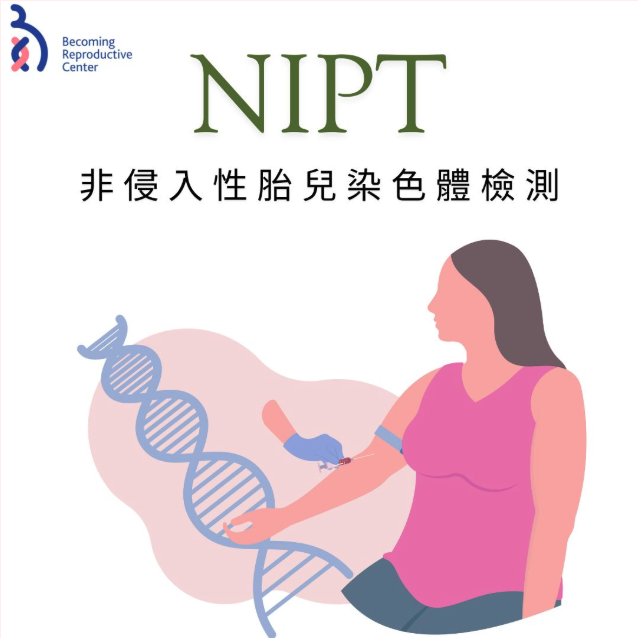
I. Non-Invasive Prenatal Testing(Non-Invasive Prenatal Testing, NIPT)
-
NIPT is a “non-invasive” prenatal screening method that can generally be performed after 10 weeks of pregnancy. A blood sample is taken from the pregnant woman, fetal cell-free DNA is extracted, and next-generation sequencing technology is used to analyze fetal chromosomes. For pregnant women, it provides a safe and reliable option for fetal chromosomal screening.
-
This test is mainly used to screen for the risk of fetal chromosomal number abnormalities and certain small chromosomal deletions, such as Down syndrome, Edwards syndrome, Patau syndrome, and Prader-Willi syndrome. The report indicates whether chromosomal abnormalities may be present and the estimated level of risk.
-
-
II. Advantages of NIPT Compared with Invasive Tests Such as Amniocentesis(Amniocentesis) or Chorionic Villus Sampling(Chorionic Villus Sampling,CVS):
-
⊕** Earlier results:**NIPT can usually be performed after 10 weeks of pregnancy, and the report is generally available within 1-2 weeks. Amniocentesis, by comparison, is usually performed at 16 weeks of pregnancy or later, with results available after approximately two weeks of cell culture. Therefore, NIPT can provide results considerably earlier, allowing expectant mothers to feel reassured sooner and, when necessary, enabling earlier diagnostic evaluation or related management.
-
⊕ **Reduced risk:**Amniocentesis and chorionic villus sampling are invasive procedures that require puncturing the uterus to obtain amniotic fluid or chorionic villus samples. Such procedures carry risks including miscarriage, amniotic fluid leakage, infection, or preterm birth. NIPT does not require an invasive procedure and only requires a maternal blood sample, so it poses far less procedural risk to the pregnant woman and fetus.
-
**III. Who Is NIPT Suitable For?(**Testing may be performed in pregnant women after 10 weeks of pregnancy):
-
⊕ Pregnant women concerned about the risks of invasive testing
-
⊕ Pregnant women over 34 years of age
-
⊕ Pregnant women whose ultrasound examination raises suspicion of fetal chromosomal abnormalities
-
⊕ Those with a family history of congenital abnormalities or who have previously had a baby with congenital abnormalities
-
⊕ Pregnant women who conceived through assisted reproduction or egg donation
-
⊕ Pregnant women who are not suitable candidates for invasive testing(such as those who are HIV-positive, have placenta previa, oligohydramnios, uterine fibroids, or are undergoing treatment to maintain the pregnancy)
-
-
IV. Limitations of NIPT Screening (Because a single testing method cannot detect every possible abnormality, NIPT screening is not recommended in the following situations):
⊕ Pregnant women weighing >100kg
-
⊕ Pregnant women who have received a blood transfusion within the past year or who have a malignant tumor
-
⊕ Triplet pregnancies or within one month after fetal demise or vanishing of one embryo has been identified(for example, when one fetus in a multiple pregnancy stops developing)
-
Those with chromosomal abnormalities such as chromosomal translocation, chromosomal inversion, uniparental disomy, or chromosomal mosaicism
-
NIPT is a non-invasive screening option for pregnant women at higher risk, such as those of advanced maternal age, with a family history, or with abnormal screening results. Its advantages include a simple procedure, reduced risk to the pregnant woman and fetus, and the ability to provide reliable screening results relatively early in pregnancy. However, NIPT is a screening tool used for risk assessment rather than a definitive diagnostic test. Results should therefore be discussed with a physician, and additional diagnostic testing may be necessary to confirm whether the fetus has a chromosomal abnormality.
-
Becoming Reproductive Center provides couples who become pregnant through assisted reproductive treatment with detailed information about the importance of fetal chromosomal testing and the available testing methods. After discussing and evaluating the options, the couple may choose the appropriate test. In general, NIPT is arranged after approximately 10 and a half weeks of pregnancy.
-
**Sources: GeneLink Digital Genetics, Sofiva Genomics**