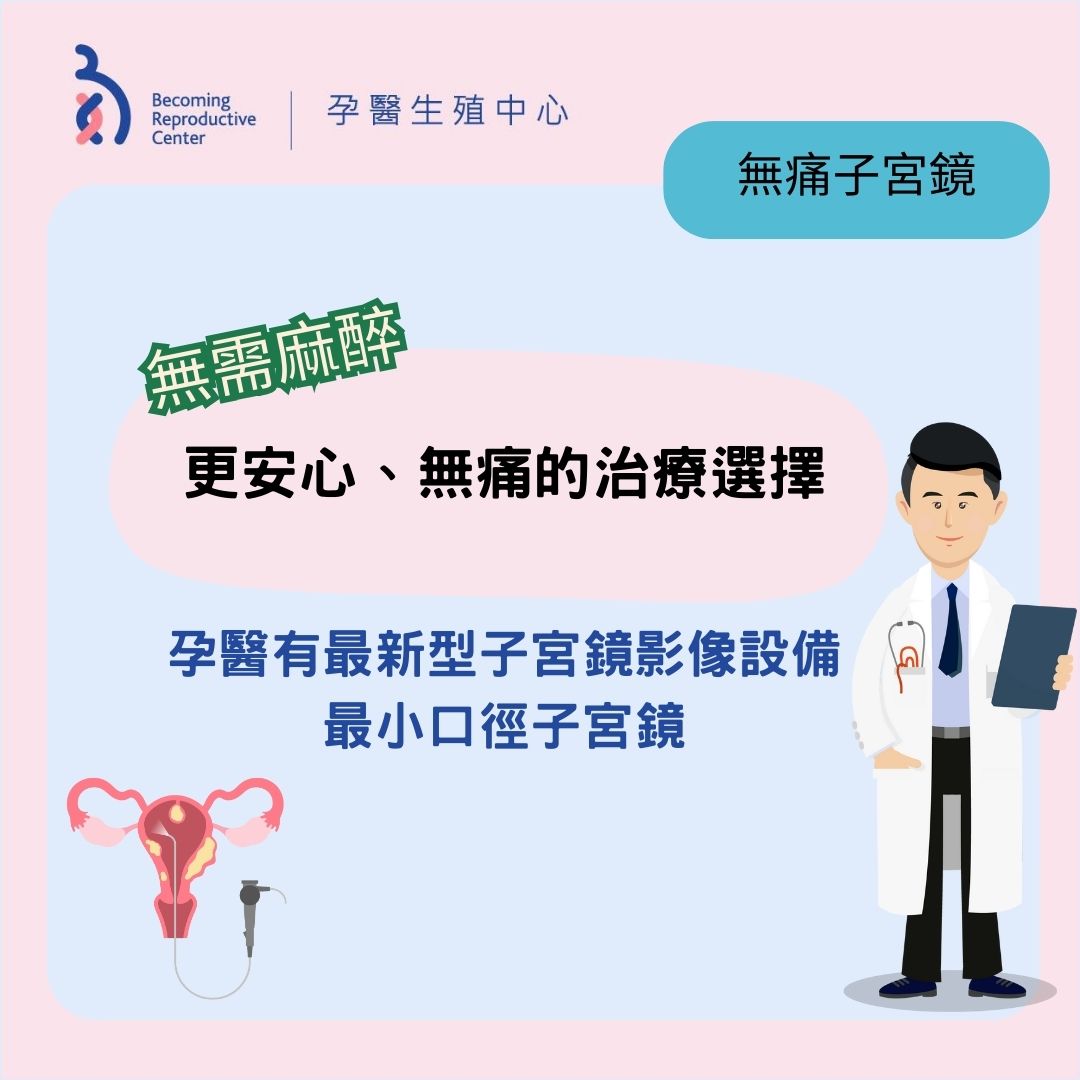
A Safer, Pain-Free Treatment Option: Hysteroscopy
In assisted reproduction treatment, whether the treatment succeeds is like finding a suitable living environment. It depends on three major factors:
- 1.The tenant
The quality of the embryo - 2.The landlord
The patient’s overall health condition, ovarian function, and other factors - 3.The room
The uterine structure, whether the fallopian tubes are open, and whether there are any endometrial lesions
According to the 2021 Assisted Reproduction Outcomes Report released by Taiwan’s Health Promotion Administration, about 9% of infertility patients in Taiwan have uterus-related issues.
In the past, methods used to evaluate uterine-related conditions included transvaginal ultrasound and hysterosalpingography, HSG.
Currently, hysteroscopy allows examination and treatment through a minimally invasive approach. It not only reduces the risk of infection, but also shortens recovery time. It should be considered one of the most direct and accurate tools in the new generation for evaluating uterine cavity lesions.
Before preparing for IVF treatment, hysteroscopy is a step worth considering.
It not only helps evaluate and improve the intrauterine environment, but can also remove potential obstacles at the same time, increasing the chance of embryo implantation and improving the success rate of IVF treatment.
We recommend that women preparing for pregnancy consult their doctor to determine whether they meet the indications for hysteroscopy.
Based on your individual condition, a precise and personalized hysteroscopic examination and treatment plan can then be developed to help your wishes come true.
Learn more about “The Application of Hysteroscopy in Infertility”:
https://www.brcivf.com/ec99/IVF/news.asp?newsno=274
BRCIVF wishes your dreams come true!