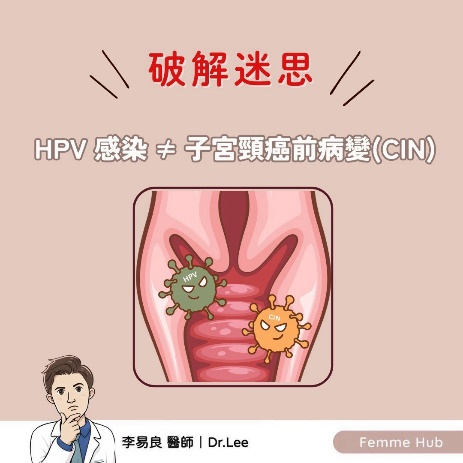
Does HPV infection always develop into cervical precancerous lesions (CIN)?
Whether an HPV infection progresses to CIN mainly depends on the viral type, whether the infection persists, and the viral load. In fact, most HPV infections are temporary and can be cleared naturally by the immune system. Only a small proportion of persistent infections gradually progress to precancerous lesions.
Current research shows that among women who test positive for high-risk HPV but have normal cervical cytology, the cumulative risk of developing CIN3 or more severe lesions (CIN3+) is approximately:
- * 1 year: 2.1%
- * 3 years: 4.3%
- * 5 years: 6.4%
Overall, approximately 3–5% of women with persistent high-risk HPV infection may further develop CIN.
In addition, most infections can clear naturally. About 79% of HPV infections resolve on their own. Even when the infection has persisted for more than 6 months, approximately 70% can still be cleared by the immune system.
The risk also varies depending on the HPV type. Among them, HPV 16 carries the highest carcinogenic risk:
- * For women with a single positive HPV16 test and normal cervical cytology, the 12-year risk of CIN3+ is approximately 26.7%.
- * If HPV16 infection persists, the 12-year risk of CIN3+ may rise to 47.4%, with some studies reporting risks as high as 55%.
Other high-risk types, such as HPV 18, 31, and 33, also carry significantly higher risks than many other HPV types, although their risks remain lower than that of HPV16.
What factors increase the risk of progression?
In addition to the HPV type, the following factors may increase the likelihood of developing CIN:
- * Persistent infection (the most important risk factor)
- * Higher viral load
- * Older age
- * Infection with multiple high-risk HPV types
- * Existing CIN1 lesions
Studies have found that more than 70% of CIN cases occur within 24 months after persistent infection develops.
What should you do if you test positive for HPV?
If you test positive for HPV16 or HPV18, have a persistent infection, a high viral load, or other high-risk factors, closer follow-up is recommended according to your physician’s advice, even if your cervical cytology results are normal. A colposcopy may also be arranged when necessary.
In contrast, women who test negative for HPV have a very low future risk of developing CIN3+, and their follow-up intervals may therefore be extended according to screening guidelines.
The key question is not simply “whether you have HPV,” but rather “whether it is a high-risk type, whether the infection persists, and whether you receive regular follow-up.” Most HPV infections can be cleared naturally by the body. With regular screening, precancerous lesions can be detected and treated at an early stage.
㊗️Wishing everyone’s dreams come true🫶
BRCIVF wishes you a successful pregnancy!