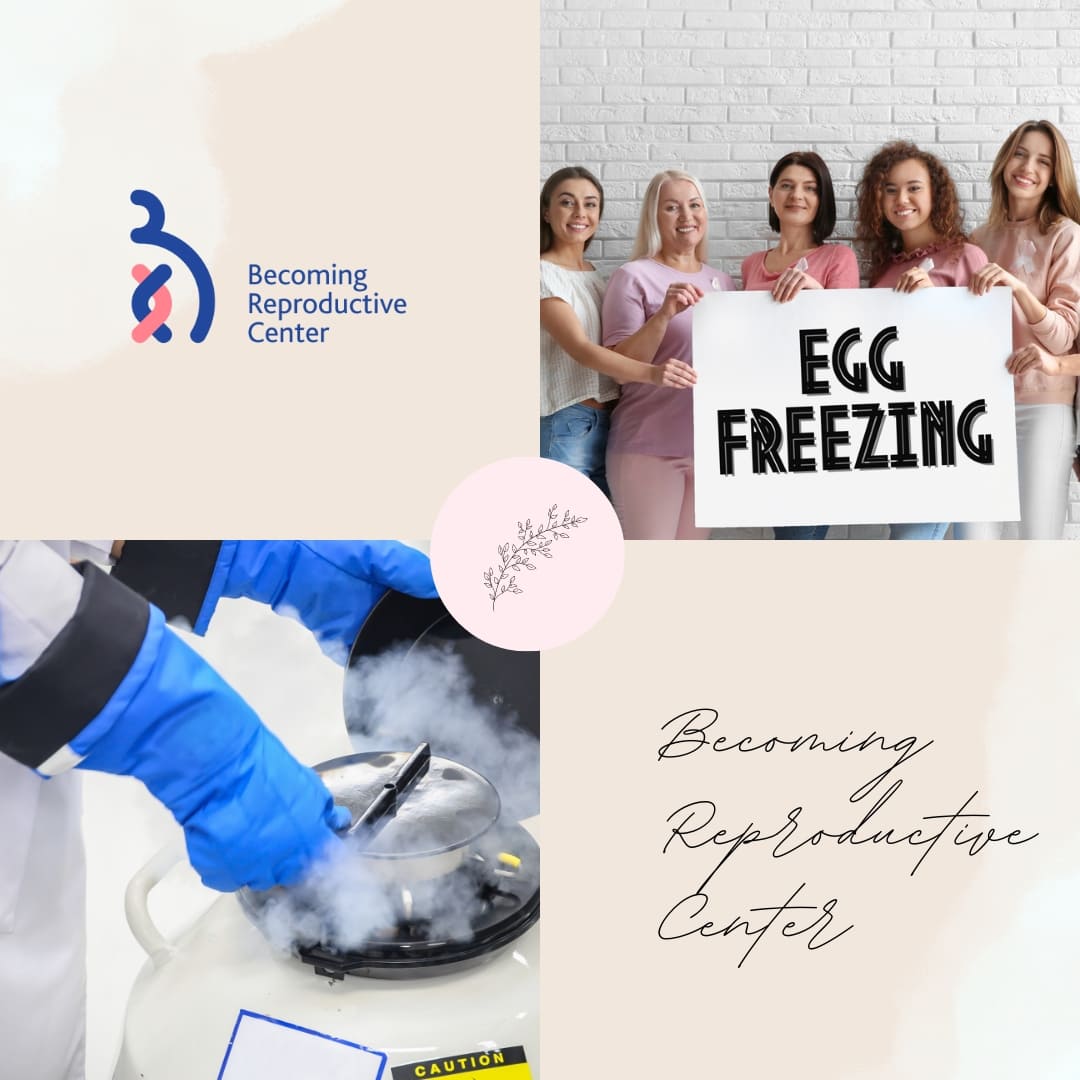
In recent years, more and more women are marrying and having children later in life. As awareness of reproductive autonomy continues to grow,
many women have added “egg freezing treatment” to their life planning. Becoming Reproductive Center consultation nurse Chen Guan-Ru has summarized three important “A” factors: AGE, AMH (ovarian reserve indicator), and AFC (antral follicle count). This information is intended for women considering egg freezing, helping you better understand the three key factors associated with successful egg freezing.
AGE: The Ideal Age
A woman’s age at the time of egg freezing is an important factor affecting the possibility of achieving a future live birth. As age increases, egg quality declines and the rate of chromosomal abnormalities in embryos rises, which in turn lowers the live birth rate.
According to research literature from European and American reproductive medicine societies, if 20 mature eggs are frozen at different ages, the estimated future live birth rates after thawing are:
・Under age 35: 80-90%
・Age 36-37: 70%
・Age 40-41: 40%
・Age 44 or older: 10%
・Anti-Mullerian Hormone(AMH): an ovarian reserve indicator secreted by small follicles in the ovaries. It can be used to assess ovarian follicle reserve. A higher value generally indicates a greater ovarian reserve and potentially more eggs retrieved after ovarian stimulation injections.
・AMH(ng/ml) Reference Values:
・1.7-5: Normal range for women under age 35.
・Below 1.2: May indicate a risk of diminished ovarian reserve or premature ovarian insufficiency, with a lower ovarian response during treatment.
・Above 5: May suggest polycystic ovary syndrome and may be associated with irregular menstruation.
Antral Follicle Count(AFC): The number of antral follicles can be assessed through a transvaginal ultrasound on the second or third day of the menstrual cycle. AFC can help predict the approximate number of eggs that may be retrieved during a treatment cycle. Therefore, having an adequate number of antral follicles may help improve the chances of pregnancy.
According to research statistics, the recommended number of frozen eggs associated with approximately a 75% chance of achieving one live birth is:
・Under age 35: 10-15 eggs
・Age 35~39: 15-20 eggs
・Age 40-41: 30-40 eggs
・Age 42 or older: 61 eggs. These data show that the younger a woman is when freezing her eggs, the fewer frozen eggs may be required to achieve a successful live birth.
These three “A” factors are important considerations in the success of egg freezing. At Becoming Reproductive Center, women undergoing egg freezing are not all given the same medications and dosages. Instead, the type and dosage of ovarian stimulation medication are individually determined based on AGE, AMH, and AFC, and the timing of the trigger injection is precisely planned.
During the egg retrieval procedure, we routinely use a Double lumen egg retrieval needle. Through repeated flushing and aspiration, we aim to avoid missing any precious eggs and to retrieve the maximum possible number of sufficiently mature eggs in a single procedure for freezing, thereby reducing the considerable cost associated with repeated egg retrieval cycles.
You are welcome to consult Becoming Reproductive Center, where we can arrange a “personalized” egg freezing treatment plan for you.
Reference: Taiwan Society for Reproductive Medicine, Egg Freezing Guidelines 2018
http://211.75.157.1:6084/online-reservation
More celebrities’ egg freezing experiences at Becoming Reproductive Center:
Xiao Zhen’s egg freezing journey👉:
Full IG post by Miss Freckles:
https://www.instagram.com/p/CpP0fRxpjoa/?igshid=NzAzN2Q1NTE=
Li Han’s stylish egg freezing journey👉IG: https://reurl.cc/qOWORp