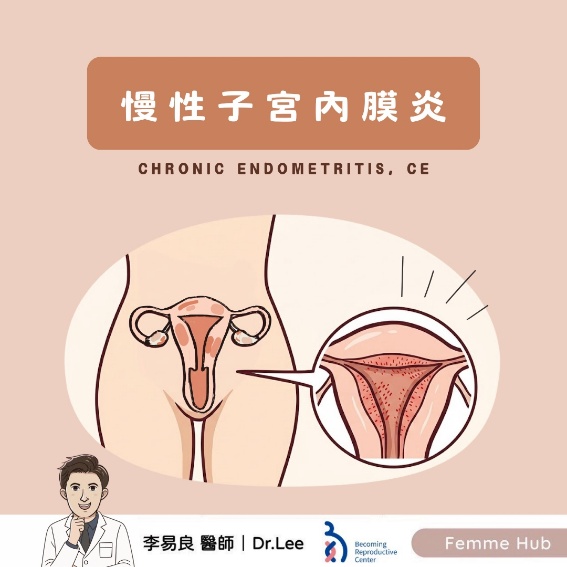
Some time ago, while performing an outpatient hysteroscopy for a good friend before she began trying to conceive, I noticed signs suggesting chronic endometritis (Chronic Endometritis, CE) on the endometrium.
This is an issue that can easily be overlooked in fertility clinics.
Chronic endometritis is not an acute infection, and many patients have almost no symptoms, so diagnosis is often delayed.
Some people have no symptoms at all, while others may only experience mild:
▪️ Abnormal bleeding
▪️ Spotting
▪️ Mild pelvic discomfort
Therefore, it is actually very difficult to detect based on symptoms alone.
Currently, the gold standard for diagnosis remains:
✔️ Endometrial biopsy
✔️ CD138 immunohistochemical staining
It usually cannot be detected by ultrasound alone.
However, during hysteroscopy, certain clues can often be observed, such as:
▪️ Endometrial hyperemia
▪️ Micropolyps
▪️ Endometrial edema
If chronic endometritis is strongly suspected, further endometrial biopsy is still recommended to confirm the diagnosis.
What effects can chronic endometritis have?
The strongest current evidence is associated with:
✔️ Infertility
✔️ Recurrent pregnancy loss (RPL)
Studies have found that the prevalence of chronic endometritis among women with infertility is approximately 19.5%, about 3 times that of the general female population.
Among patients with recurrent pregnancy loss, the prevalence is even higher at approximately 37.6%, about 3.6 times that of the general female population.
Why can chronic endometritis affect pregnancy?
Because it may:
▪️ Reduce endometrial receptivity
▪️ Alter the immune environment of the endometrium
▪️ Affect decidualization
▪️ Alter the endometrial microbiome
▪️ Disrupt the embryo implantation window
As a result, embryos may have more difficulty implanting successfully, or the risk of miscarriage may increase.
Once diagnosed, chronic endometritis is currently treated mainly with antibiotics, with Doxycycline being the most commonly used medication.
Studies show that approximately 70% of patients can achieve clearance after one treatment course, and after two treatment courses, the clearance rate can approach 90%.
More importantly, after successful clearance of chronic endometritis, the live birth rate can reach 34.1%, significantly higher than the 5.6% observed in patients in whom the condition was not cleared.
Not every patient with infertility or miscarriage necessarily has chronic endometritis.
However, if you are experiencing:
✔️ Unexplained infertility
✔️ Recurrent pregnancy loss
✔️ Suspected endometrial abnormalities
It may be worth discussing with your doctor whether further evaluation is needed.
Sometimes, identifying this long-overlooked cause can be an important step toward achieving a successful pregnancy.
Yun Medical wishes you a successful pregnancy!